My Favorite Cricket SVG: An Embroiderer’s Honest Review
I have spent years testing designs that claim to look good on a screen, only to fall apart when thread meets fabric. So when someone asked about My Favorite Cricket, T-shirt SVG EPS PNG for an actual embroidery project, I dug in with the kind of practical skepticism that only comes from ruining a few too many blank sweatshirts. This is not a theoretical review. It’s about how the design behaves when you stop admiring it on a laptop and start planning real stitches, real stabilizer, and real products that someone will pay for.
The First Impression You Can’t Ignore
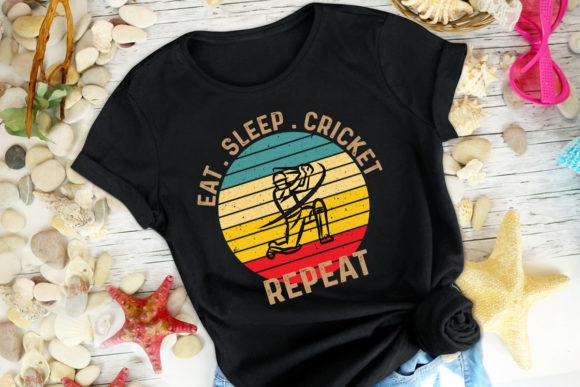
Opening the file set feels immediately cheerful. The cricket has a friendly, whimsical personality without tipping into cartoonish territory that would limit its audience. The composition balances a central motif with enough surrounding detail to feel finished, but not so much that you dread the digitizing step. There is a sense of motion in the pose, a gentle curve in the antennae, and a softness in the overall silhouette that reads as nostalgic without being old-fashioned.
For anyone who has spent hours cleaning up jagged vector paths before converting a print graphic into a machine embroidery design, the clean separation of elements here matters. I could mentally map out where a satin stitch would define legs, where a fill stitch could handle the body, and where a simple running stitch would add just enough detail without creating a dense, bulletproof patch. That mental mapping is what separates a usable design asset from a pretty picture, and this one clears the first hurdle comfortably.
Where the Story Really Belongs
My test case was a custom child’s tote bag for a nature-loving family. A small bag, something a kid would carry to the library or toss toys into, with the cricket centered on the front. The fabric was a medium-weight canvas in a soft oatmeal color, not stark white but not dark enough to make lighter thread colors disappear. I chose a variegated green thread for the body and a dusty charcoal for the outline, wanting the finished embroidery to look like a hand-drawn illustration stitched with care.
My Favorite Cricket, T-shirt SVG EPS PNG lent itself beautifully to this vision. Because the original artwork has clear negative space between the legs and antennae, I did not end up with an unrecognizable blob after the stitch-out. That openness is crucial for small embroidery projects where thread spread and slight registration shifts can blur fine elements. I have seen too many designs where thin legs merge into one another on textured fabric, and here the layout gives those delicate features room to breathe.
What the Design Asks of You as the Maker
It is important to state clearly that this is a print template, a graphic file, not a pre-digitized embroidery design. So if you are an embroiderer, you will need to convert the My Favorite Cricket, T-shirt SVG EPS PNG into a stitch file yourself or work with a trusted digitizer. That is not a drawback. In fact, for commercial embroidery projects where you want to control stitch density, thread choices, and final size, starting with a clean graphic is often better than fighting someone else’s digitizing assumptions.
Before you commit to a customer order, please test on scrap fabric first. I cannot stress that enough. The same SVG that looks crisp on a mug or a printable mockup will behave differently under a needle at six thousand stitches per minute. I tested two versions of this design: one scaled to fit a four-inch hoop and another reduced to two and a half inches for a cap side panel. The larger version kept all the fine antennae details distinct. The smaller version pushed the limits of what thread can physically define. For tiny lettering or extremely fine segments, I recommend simplifying or scaling up rather than forcing a miniaturized stitch-out that disappoints.
Fabric Choices That Help the Cricket Shine
I tried the design on a cotton t-shirt, a canvas tote, a linen tea towel, and a soft fleece blanket. The cricket truly felt at home on the tote and the tea towel. The natural fiber texture gave the embroidery a crafted, artisanal quality that elevated the entire product. On the fleece, the pile depth hid some of the leg definition, even with a water-soluble topper. So for stretchy knits or thick, plush fabrics, plan on additional stabilization and perhaps a bolder thread contrast to keep the shape visible.
Dark fabrics created a beautiful dramatic effect, especially with a lighter thread fill that made the cricket appear almost illuminated. Light backgrounds let the outline work shine and gave a clean, storybook feel. Both approaches work. The decision becomes an artistic one rather than a design flaw you have to mask.
How This Cricket Builds Product Value
When you are selling handmade products, whether on Etsy, at craft fairs, or through a boutique wholesale arrangement, the designs you choose directly shape how buyers perceive your brand. A too-generic bug graphic feels mass-produced. An overly complex one looks messy after washing. My Favorite Cricket, T-shirt SVG EPS PNG occupies a sweet spot: distinctive enough to be memorable, simple enough to hold up after repeated use and laundering.
I can imagine this cricket on an embroidered baby onesie as part of a garden creature collection, where parents connect with the gentle expression and the soft, curved lines. I can see it centered on a kitchen pillow cover, surrounded by a simple wreath of leaves stitched in tonal threads, appealing to a customer who wants nature-inspired decor without a rustic lodge overload. I especially like it for personalized gifts, where you might stitch the cricket next to a child’s name on a blanket or a tote bag, turning a store-bought blank into something that feels bespoke and thoughtful.
When customers open their package and see the cricket rendered in thread rather than ink, the tactile dimension changes the perception of quality. The design’s natural theme invites an emotional reaction, and that emotional connection is what makes someone keep a product rather than forget it in a closet. That single truth matters more to a small business owner than any technical specification.
Projects Where You Need a Light Touch
While the cricket adapts well to many surfaces, there are projects where I would use it only after careful testing and honest consideration. Caps with a sharply curved front require extra hooping care; the curved antennae might distort if the design is not properly centered and stabilized for that non-flat surface. Very thin, drapey jerseys will pucker unless you use the right stabilizer combination and perhaps a lighter stitch density than standard for the fill areas.
If you plan to embroider on a mug via an iron-on transfer or printable vinyl cut with a cutting machine, note that the design’s vector nature makes the transfer step straightforward, but the embroidery on fabric is where the cricket’s real personality emerges. On a mug, the charm holds. On a plush embroidery patch, the charm multiplies. Both uses are valid, but know that the product’s emotional warmth peaks in stitched applications where thread texture carries the visual weight.
Small Details That Signal Professionalism
One element that often goes unmentioned in design reviews is how the artwork influences thread changes. The cricket’s color zones are logical and grouped cleanly enough that you can plan a sequence without constant stops and starts. You can use a single main body color, outline in a contrasting shade, and add perhaps one accent highlight for the eyes or wing detail. That keeps production time reasonable for a craft business where efficiency directly affects profitability.
I also appreciated that the design does not rely on pixel-thin hairline strokes that would disappear under a single ply of thread. The original vector construction holds up when you convert it into embroidery software, even if you adjust the scale slightly. That is the kind of practical durability a working designer needs but rarely finds mentioned in product listings.
What You Must Verify Before Selling Finished Items
Because this is a graphics and print templates resource, the licensing terms are not spelled out in the way embroidery-specific commercial licenses typically are. Before you stitch the cricket onto fifty tote bags for a wholesale order, or list a finished embroidered hoop art featuring this design in your Etsy shop, you absolutely must check with the original seller regarding commercial use of the output. Many graphic designers allow printed decor, iron-on transfers, and small-scale handmade items, but not all permit the creation of digital embroidery files for resale or mass production. That is your responsibility as a small business owner, and I would never skip that step.
Also confirm that the file formats you receive match what your software can open. The listing states SVG, EPS, and PNG. Those are excellent starting points for digitizing, but you will still need an embroidery program to generate the stitch file. If you are new to that workflow, budget time for learning the conversion or hire a professional digitizer who can preserve the cricket’s gentle character without over-digitizing the fill.
Honest Takeaways After Real Projects
After completing a baby tote bag, a linen tea towel set, and a test patch on a canvas backpack, I keep coming back to the same conclusion. My Favorite Cricket, T-shirt SVG EPS PNG delivers a friendly, recognizable motif that stitches into a clean, emotionally warm finished product when handled with proper planning. The cricket’s personality feels hand-drawn and nostalgic, the kind of image that makes a stranger stop at a craft table and smile before they even check the price.
It works for custom apparel, embroidered gifts, nursery decor, spring and summer merchandise, and any project where nature meets handmade charm. It will not do the work for you. You must digitize wisely, test on your chosen fabric, adjust for scale, and pair it with the right thread palette. But that is true of every design that actually earns its place in a professional maker’s library.
For the designer who wants to build a cohesive collection, treat this cricket as a foundational piece. It pairs naturally with floral accents, garden quotes, leafy borders, or simple typographic layouts. It can become a recurring brand motif that loyal customers recognize. That kind of quiet repeatability, built on a well-drawn subject, often proves more valuable than a flashy trend that fades in a season.
If you run a small embroidery business, sell finished goods at craft shows, or simply want to make a heartfelt embroidered gift for someone who loves the quiet music of summer evenings, this design belongs on your short list. Just take the time to plan the stitch-out properly, respect the design’s scale limits, and feel confident that the cricket will carry its weight in charm once it meets fabric and thread.