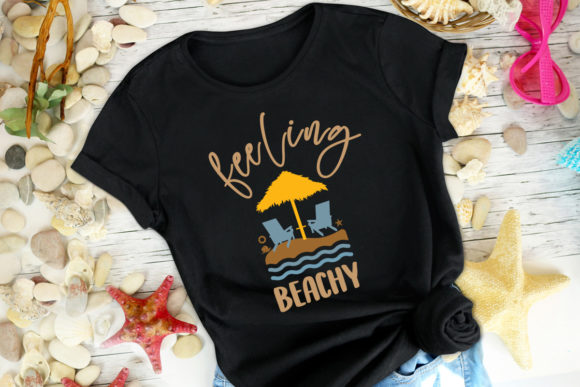
Feeling Beachy SVG Graphics & Print Templates Review
When I first opened the Feeling Beachy, Beach Tshirt SVG EPS PNG file, I immediately pictured a whole summer collection spread across my craft table. There's something about a design that captures the essence of salt air, warm sand, and lazy afternoons without being overly complicated. The mood here is playful and relaxed, with a hint of nostalgia that makes you want to book a vacation immediately. It leans into that carefree coastal vibe that attracts buyers who love casual, sunny aesthetics. For handmade sellers like me, this kind of design taps directly into the seasonal buyer mindset—people shopping for vacation outfits, beach trip souvenirs, or summer gift exchanges.
As a graphic design asset, the file set includes SVG, EPS, and PNG formats, which covers the main needs of most crafters and print-on-demand creators I know. The crisp vector lines in the SVG mean you can scale it up for a large tote bag or down for a small sticker without losing quality. The PNG comes with a transparent background, which is essential when you're layering it over product mockups or creating digital proofs for customers. Right away, I could tell this SVG design was built with crafters in mind because the cut lines are clean and there are no stray nodes that would send a cutting machine into chaos.
The visual personality feels breezy and light, which works beautifully for coastal-themed handmade products. It carries a feminine, slightly whimsical touch without being overly delicate, making it versatile for both adult and youth apparel. I could see this design attracting buyers who love beach house decor, tropical vacation vibes, and simple summer styling. The typography has a relaxed handwritten feel that pairs well with both script fonts and clean sans-serif layouts, giving crafters flexibility when combining it with other design elements.
What You Can Actually Make With This Design
I tested the PNG design on several product types in my workflow. Here's where it truly shines and where you need to pay attention. For t-shirt design applications, the file performed beautifully on light-colored cotton. The scaling held up at standard adult sizes, and the design didn't feel cramped or awkward. When I placed it on a navy blue shirt mockup, the contrast was strong enough to remain readable, though I always recommend testing your specific heat transfer material since some darker substrates require slight adjustments.
Mug projects came out exceptionally well. The shape of the illustration fits the standard 11oz mug wrap area comfortably, leaving enough breathing room on either side. For sublimation mugs, the PNG resolution was high enough to produce a sharp transfer without pixelation. I also ran a test on a 20oz skinny tumbler template, and the design adapted nicely after a minor resize. This kind of flexibility matters when you're building a cohesive printable design collection for a seasonal launch.
Sticker making with this file was straightforward. The bold enough outlines meant my Cricut Explore Air 2 had no trouble tracing the SVG design during the print-then-cut workflow. I produced a batch of weatherproof stickers for water bottles and laptop cases, and the design retained its charm at a two-inch size. For anything smaller than that, I would caution crafters to do a test cut because the finer internal details might become tricky depending on your blade condition and material thickness.
Paper crafts like greeting cards, gift tags, and scrapbooking layouts welcomed this design with open arms. There's something satisfying about using a beach-themed clipart that doesn't feel generic or mass-produced. When I printed it on textured cardstock for a set of thank-you cards destined for a beach wedding order, the result looked polished and intentional. The design also worked nicely as a printable decoration for party favor tags and small signage at a client's coastal bridal shower.
Preparing For Your Handmade Business Orders
If you're an Etsy seller or craft fair vendor, seasonal timing is everything with beach-themed products. I recommend ordering your sample materials early and running a complete test production before listing finished items. With this digital product, you can create an entire beach collection: think coordinated t-shirts, matching tote bags, sticker sets, and mug bundles. Customers love buying themed sets, and having a reliable graphic design asset makes that possible without spending hours creating original artwork from scratch.
One aspect I evaluate carefully for any commercial design is how well it translates across different product categories. This file handled the jump from apparel to home goods to paper products without losing its appeal. For small business branding, using a consistent design style across your product line builds recognition. When shoppers see your booth at a market or browse your Etsy shop, that visual cohesion makes your brand feel established and trustworthy.
However, I always remind fellow makers to confirm the commercial license terms before selling finished products. Not all design assets come with the same permissions, and assuming you have unlimited commercial rights can lead to problems later. Check whether the license covers physical product sales, digital product resale, or both. Most reputable marketplaces clearly state these terms, but it is your responsibility as a business owner to verify before listing items in your shop.
Technical Checks Every Crafter Should Run
Before committing to a production run, there are several technical checks I perform on any new design asset. First, open the SVG file in your cutting software and examine the layers and paths. Look for any disconnected nodes, overlapping cut lines, or unnecessarily complex shapes that could slow down your machine or cause incomplete cuts. The Feeling Beachy file I reviewed had clean paths, which means less time troubleshooting and more time creating.
Second, inspect the PNG at full resolution. Zoom in to check for any transparency issues around the edges, especially where the design meets the background. A common problem with lower-quality files is a slight white halo that appears when you place the design on colored products. I didn't encounter this issue here, but I recommend always viewing the file on both light and dark backgrounds before finalizing your design.
Third, print a test on regular paper before committing to expensive sublimation paper or heat transfer material. Colors can shift between screen and print, and what looks vibrant on your monitor might print slightly muted. Running a quick test lets you adjust color saturation or brightness if needed. This step saved me from wasting sublimation blanks more times than I can count.
For vinyl decals, especially when weeding intricate designs, having a sharp point and good lighting makes all the difference. The text details in this design are substantial enough that weeding wasn't a struggle, but if you plan to cut this very small, consider simplifying the smallest details or using a weeding tool with a fine tip. Layered vinyl projects that require multiple colors also benefit from a carefully planned cutting order, especially if you're matching the design to a specific color palette for a customer order.
Styling Ideas For Different Products
One of my favorite aspects of working with print templates and graphics like this is experimenting with styling combinations. For a feminine, boutique-style shirt, I paired the design with a flowing script font underneath and used a soft pastel heat transfer vinyl on a cream-colored tee. The result was exactly the kind of item that sells quickly at summer markets and beach town boutiques.
For a more playful, family-friendly look, I placed the design on bright turquoise tank tops and added a bold sans-serif text line below it. The contrast between the handwritten feel of the main design and the clean, modern secondary text created an appealing dynamic that worked for matching family vacation shirts. This approach also makes the design more versatile because you can adjust the accompanying text to suit different audiences without changing the core graphic design asset.
Scrapbooking enthusiasts and paper crafters will appreciate how this clipart looks when printed at various sizes. I created a set of journal cards featuring the design scaled down to approximately three inches, and they became charming accents for a beach memory album. The detail held up well at that reduced size, which speaks to the quality of the original vector file. For printable wall art, a simple frame and a coordinating mat turn this design into an affordable piece of coastal decor that fits nursery rooms, bathrooms, and entryways alike.
Building A Seasonal Product Line
When I plan seasonal collections for my handmade shop, I think in terms of product families. The Feeling Beachy design works as an anchor piece around which you can build complementary items. Start with a main product—say, a unisex t-shirt—then expand into accessories like tote bags, canvas pouches, and baseball caps. Add paper goods such as greeting cards and gift tags, and finish with small impulse-buy items like stickers and magnets. By the time summer arrives, you have a complete lineup that appeals to gift shoppers and self-purchasers alike.
For Etsy product listings, high-quality photos showing the design on multiple products can increase buyer confidence. Use realistic product mockups that show how the design looks in real-life settings. A flat lay of a beach towel with a matching shirt, mug, and sticker set creates a lifestyle image that helps shoppers visualize owning the entire collection. I have found that bundle listings featuring coordinated items often outperform single-product listings during peak seasonal shopping periods.
Print-on-demand sellers using platforms like Printful or Printify should verify that the design resolution meets the requirements for each product type. The high-resolution PNG design in this file set is suitable for most common print-on-demand products, but always check the specific pixel dimensions recommended by your fulfillment partner. A design that looks crisp on a mug might need a different file preparation for a large canvas print.
Practical Lessons From Real Production
After years of making and selling handmade products, I have learned that even the prettiest design needs practical testing. One batch of shirts I produced using a similar beach-themed design taught me that certain pastel ink colors look washed out on natural cotton but vibrant on polyester blends. Your material choices affect the final product as much as the design itself. Order sample blanks, test different garment colors, and photograph everything before listing items publicly.
For crafters using cutting machines like Cricut or Silhouette, always check how the file imports into your specific software. Sometimes SVG files created in one program import differently into another, and you might need to ungroup elements or adjust compound paths. Running a test cut on scrap vinyl or cardstock takes a few extra minutes but prevents the frustration of wasted materials. I learned this lesson the hard way when a beautiful SVG design produced a tangled mess because of an unexpected grouping issue.
Whether you are building a design bundle for your own shop or sourcing assets for customer orders, having reliable, well-constructed files saves time and protects your reputation. Buyers notice the difference between a crisp, professional-looking product and one that appears slightly off. The Feeling Beachy, Beach Tshirt SVG EPS PNG earns its place in my seasonal design library because it delivers consistency across multiple applications, and that reliability is invaluable when you are fulfilling orders and meeting deadlines.
For makers exploring the creative marketplace space, investing in quality design assets pays dividends. Each file represents potential products, and when you find one that adapts smoothly to different crafts, you unlock a range of listing opportunities. From personalized gifts to bulk party favors, the versatility of a well-made graphic allows your handmade business to grow without constantly searching for new raw materials.