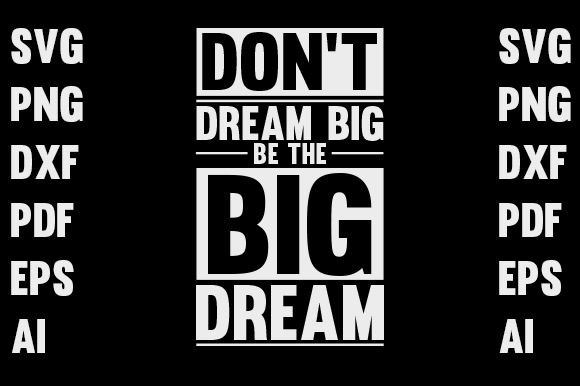
Don’t Dream Big T-shirt Design Review: Graphics & Print Templates
I’ve been designing and selling handmade physical products for years, so when a graphic design asset like this Don t Dream Big T-shirt Design lands in my toolkit, I look at it through the eyes of a maker who has to cut, press, print, and sell the final result. The first thing I noticed about this illustration was its confident, slightly rebellious tone. It doesn’t feel overly cute or childish. Instead, it carries a clean, modern, and bold handwritten energy that speaks directly to a buyer who values authenticity. I immediately imagined it on a soft cotton tote bag at a weekend craft fair, printed in crisp black ink, catching the eye of a young entrepreneur or a dreamer who loves a touch of sarcasm in their wardrobe. That’s the mood this SVG design sets: playful yet grounded, with a minimalist edge that fits right into the printable design and digital product world.
From a crafting perspective, the Don t Dream Big T-shirt Design feels like a versatile workhorse, not a one‑trick pony. The typography is the star. It’s a hand‑lettered style that walks the line between casual and statement‑making. This isn’t a delicate script that gets lost on a mug; it’s solid enough to hold its own on a tote bag, a hoodie, or even a large wall decal. At the same time, the letterforms are simple enough that you won’t struggle with tiny weeding disasters when you’re working with vinyl. When I opened the file folder and saw the familiar formats—SVG, PNG transparent, DXF, EPS, AI, PDF—I felt that immediate sense of relief. That’s a format list that works for everyone: the Cricut user cutting heat transfer vinyl, the Silhouette owner printing stickers, the sublimation crafter pulling up a high‑resolution PNG design, and the paper artist who just wants a clean PDF for card making.
First Impressions: Bold, Playful, and Customer-Ready
When I previewed the design on a product mockup—something I always do before committing to a new asset—the phrase “Don’t Dream Big” really came alive. It has that motivational-but‑not‑cheesy vibe that sells well in the handmade community. A buyer might be looking for a gift for a friend who’s taking a career leap, or a teen who wants a graphic tee with an edge. The mood isn’t overly feminine or masculine; it’s right in the unisex sweet spot. I’d describe the style as modern casual with a hint of motivational grit. Because the message is slightly counter‑intuitive, it stops the scroll. That matters when you’re listing on Etsy or building a booth display for a busy craft fair. In my experience, designs that spark a little curiosity perform much better than overly generic sayings.
The transparent PNG opened perfectly with crisp edges, which told me right away that the original vector work was clean. There’s nothing worse than a jagged outline when you’re selling to a customer who expects professional finish. I also pulled the SVG into Cricut Design Space without any hassle. No random stray nodes, no weird open paths. That’s the kind of quality you hope for in a print templates and graphics bundle.
What Makes This T-shirt Design a Versatile Crafting Asset
The real strength of Don t Dream Big T-shirt Design is its ability to shift across product types without losing impact. Because the composition is primarily typographic, it doesn’t depend on intricate illustration elements that might break apart when you size it down for a sticker. You can easily use it as a full‑front shirt print, a left‑chest logo, or a centerpiece on a 11 oz mug. I tested the layout on a round tumbler wrap in a sublimation mockup, and it curved nicely without distortion. For planners and journal makers, this could become a popular printable design cover page or a vinyl decal for a hardcover notebook. The versatility is exactly what you want when you’re sourcing design assets that need to pay for themselves across multiple product lines.
I also love that this works for both print‑on‑demand sellers and DIY makers who physically produce inventory at home. If you upload it to a POD platform, the high‑quality AI and EPS files give you the resolution and scalability for professional print shops. For crafters who cut their own heat transfer vinyl, the DXF and SVG are ready to go. Having all these formats in one place means you don’t have to waste time converting or cleaning up third‑party downloads.
Real-Life Crafting Scenarios: From Shirts to Stickers
Let me walk you through how I’d realistically use this design for a small batch of customer orders. Suppose I’m preparing for a local pop‑up market next month. My product lineup usually includes crewneck sweatshirts, canvas tote bags, matte vinyl stickers, and occasional greeting card sets. The Don t Dream Big T-shirt Design would first go onto a soft unisex tee in a charcoal gray. I’d cut the SVG from a smooth heat transfer vinyl in a muted sage green or warm terracotta. That color combination immediately upgrades the design from a basic black‑and‑white look to something that feels curated and cohesive with my handmade business branding. Next, I’d size it down to about 3 inches wide and punch out some kiss‑cut stickers using my Silhouette. The bold letterforms stay readable even at smaller sizes, though I wouldn’t push it below 2 inches for a sticker because the counters may start to close up. Still, 3‑inch stickers on matte paper with this saying? Those sell out fast at the impulse‑buy price point.
For the paper craft side of my business, the printable design aspect shines. I’d pull the PDF into my layout software, pair it with a subtle floral background, and create a set of A2 greeting cards. Add a kraft envelope, and suddenly I have a thoughtful “encouragement” card that isn’t overly sappy. This is the kind of product that does well as an add‑on purchase—customers buying a bigger gift item often grab a matching card. I can also see this design used on gift tags, party favor tags, or even as part of a scrapbook title. The crisp PNG design works beautifully for digital planners too, where users overlay text on a weekly spread.
Where This Design Shines and Where It Needs a Little Care
Let’s be honest: no design works perfectly for every single craft application without some adjustments. This one shines on larger surfaces. A tote bag, a 15 oz mug, a t‑shirt, a wall decal—the message lands loud and clear. It also works great in sublimation design because the typography stays vivid when transferred to polymer‑coated surfaces. I’d happily place it on a glossy ceramic ornament or a puzzle blank. The clean lines make weeding relatively painless, which matters when you’re producing multiple shirts for an event.
Where I’d urge caution is with ultra‑small cuts or extremely detailed vinyl layering. The letterforms are bold, but some interior spaces, such as the loop in the “g” or the open counter of the “e,” could become fiddly if you shrink the design below 2 inches for adhesive vinyl. If you’re layering multiple vinyl colors—say, a shadow layer behind the text—you need to ensure perfect registration. It’s doable, but I’d recommend testing the layered version on a scrap piece before running a full customer batch. Also, if you plan to use this on a dark garment with light vinyl, the negative spaces must be carefully weeded. Always mirror the SVG design and cut a test first. For sublimation, check your color profile; what you see on screen might print a touch warmer, so a print test on your specific paper and blank is non‑negotiable.
Practical Crafter Notes Before You Press Print or Cut
Over the years, I’ve developed a short mental checklist for any digital product I intend to use for customer orders or inventory. For the Don t Dream Big T-shirt Design, that checklist goes like this:
- Test the SVG lines: Open the file in your cutting software and look at the node view. Smooth paths? No unexpected compound paths? This one passed with clean, minimal nodes.
- Check PNG resolution: The transparent PNG came through at 300 DPI, plenty for printable sheets and sublimation prints. If you scale up significantly for a wide‑format print, double‑check the pixel dimensions.
- Preview on real mockups: Place the design on a t‑shirt mockup, a mug mockup, and a tote bag mockup. This design sits beautifully centered; the visual balance is pleasing.
- Test on both light and dark backgrounds: The PNG design with transparency gives you flexibility. On a white background, it’s a straightforward black silhouette that looks graphic. On a dark background, invert it or use a light vinyl color; always check contrast.
- Resize strategically: For a shirt, aim for 10–12 inches wide. For a mug, 3–4 inches. For stickers, 3 inches. Going smaller? Watch those delicate interior shapes.
- Simplify if needed: The design is already quite clean, but if you want a distressed look, you can add a texture overlay in your editing software before cutting.
Pairing Fonts and Layout Tweaks for Handmade Products
One thing I always consider when reviewing a graphics asset is how easily it plays with other design elements. This hand‑lettered typography has a casual, friendly rhythm. If I were to add a secondary message—perhaps a small shop name or website URL—I’d pair it with a simple sans‑serif like a clean geometric font, or a light serif if I’m aiming for a slightly more polished look. Avoid script fonts that compete for attention; let the main “Don’t Dream Big” phrase be the hero. For mugs with a wrap‑around design, I might place a tiny dot motif or a minimalist star at each end of the phrase just to anchor the composition. Since the design is delivered as an AI and EPS file, you can easily open it in Illustrator or a free vector editor to make those small modifications. That’s one of the hidden benefits of getting a package that includes both raster and vector formats: you have full control.
For planner stickers, I’d add a subtle offset contour in my cutting software to create a white border, making the stickers pop against colorful weekly spreads. For iron‑on vinyl, I’d mirror the design and suggest using a heat press rather than a home iron to ensure the thin parts of the letters adhere completely.
Commercial Licensing and Small Business Use
This is where many crafters slip up. Before you order a bulk blank shipment and start manufacturing goods to sell, confirm that the Don t Dream Big T-shirt Design comes with a commercial license that covers physical product sales. The description implies typical use for shirts, mugs, bags, decals, and card making, but I always recommend reading the specific licensing terms provided by the seller. In most handmade marketplaces like Etsy, customers expect that you have the right to use the design on the products you sell. If the license restricts the number of units or forbids use on print‑on‑demand platforms, you need to know that upfront. For my own shop, I only use commercial design assets that explicitly allow for physical end products sold directly to consumers. This kind of transparent design bundle usage helps keep your small business branding consistent and legally safe.
When you’re ready to list your finished product, do yourself a favor and take high‑quality photos. Place the shirt or mug in a lifestyle setting, and mention in your description that the illustration was professionally designed. Buyers appreciate knowing they’re getting something unique, not just a generic iron‑on from a big‑box store. The Don t Dream Big T-shirt Design brings that handcrafted yet polished feel that works for both craft fair shoppers and online creative marketplace browsers.
Final Verdict: A Smart Pick for Etsy Sellers and Craft Fair Vendors
After putting this graphic design asset through its paces—cutting, printing, mockup placement—I can say it’s a solid addition to any handmade business supplier list. It’s not a design that requires hours of cleanup, and it’s not so niche that you’ll struggle to find buyers. The message is relatable, the typography is on‑trend without being fleeting, and the file bundle covers nearly every scenario a crafter might encounter. Whether you’re making tumblers, apparel, stickers, or printable cards, the Don t Dream Big T-shirt Design brings a confident, modern voice to your product line. For the price, the flexibility of formats—SVG, PNG transparent, DXF, EPS, AI, PDF—makes it a low‑risk investment. Just remember to test your materials, check your license, and always preview on an actual product before you scale up production. As crafters, we know that small details make the difference between a one‑time sale and a loyal customer. This design helps you hit that mark.