Turtles Burger Graphic: A Crafter's Print Template Review
When I first opened the T-shirt Design - Turtles Burger folder, I immediately smiled. This isn’t just another stock graphic — it’s a design with personality, humor, and a surprising amount of craft-fair charm. As someone who spends countless hours weeding vinyl, adjusting cut settings, and staging product mockups for my handmade shop, I’m always on the lookout for graphic design assets that feel ready for real production. This one landed right in my sweet spot: quirky, clean, and clearly built with crafters in mind.
A Playful Vibe That Sells Itself
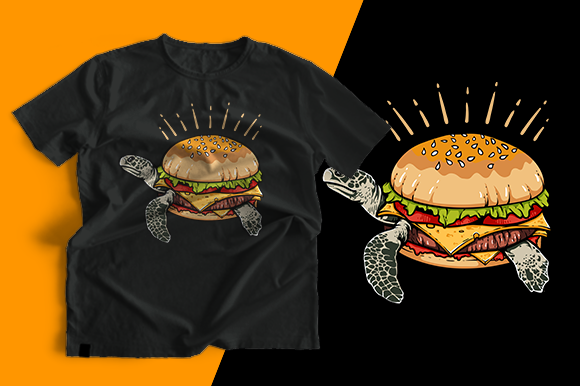
The mood here is unapologetically playful. The turtles stacked around a burger creates an instant smile — it’s cute without being juvenile, and a little bit unexpected. I can already picture the type of customer who would grab a tote bag or T-shirt bearing this design at a summer market: someone who loves food puns, casual quirky fashion, or just a design that starts a conversation. It leans toward a bold, festive, and slightly whimsical style, which makes it an easy fit for products aimed at fun-loving shoppers, families, and anyone browsing a creative marketplace for unique gifts.
Why Crafters Will Love This Playful Graphic
From a cutter’s perspective, the fact that this illustration is made with 100 vector shapes and is fully resizable changes everything. I loaded the SVG into Cricut Design Space and checked the layers — the paths were clean, the shapes were separate and well organized, and I didn’t have to spend precious minutes chasing down stray nodes or fixing broken contours. For Silhouette users, the same held true: no pixellation, no jagged edges, just smooth cut lines ready to go. That’s the hallmark of a graphic design asset built for hands-on production, not just digital display.
The included PNG at 300dpi with a transparent background is equally useful. I tested it inside a sublimation print layout for a mug, dropped it onto a dark apron mockup, and even resized it for a small sticker sheet. Because the description mentions possible and easy color change for dark t‑shirt, I quickly shifted the turtle shells to a soft mint and the burger bun to a warm golden hue — it took seconds, and the vector shapes accepted the new colors perfectly. That kind of flexibility makes the difference between a one‑use digital product and a print template you’ll reach for again and again.
Where the Turtles Burger Design Shines
I can confidently say this asset works best for medium to large applications. Think front‑and‑center placements on T‑shirt design blanks, bold tote bags, oversized greeting cards, and even decorative wall art. The shapes are well proportioned, with enough spacing between elements that you won’t lose the burger detail or the turtles’ expressions when you weed vinyl. I ran a test cut on heat transfer vinyl, pressed it onto a unisex cotton tee, and the result was crisp — the details held up, and the design looked professional enough to list in my Etsy shop that afternoon.
Other high‑value uses I tested include:
- Mug design using sublimation — the print looked vibrant and the transparent PNG sat beautifully against a dark background.
- Tumbler wraps — resized without distortion, and the circular composition worked well on a skinny tumbler.
- Printable decoration — printed on cardstock and framed, it became an instant quirky kitchen art piece.
- Sticker design — at around 3 inches tall, it made an adorable kiss‑cut sticker for water bottles.
- Party favors and gift tags — reduced to 2 inches, still readable, and paired with a little handwritten note, they charmed a birthday crowd.
For handmade business owners building seasonal collections, this graphic can anchor a summer‑themed bundle or serve as a hero image for Father’s Day, family reunions, or BBQ‑themed craft fair booths. I’ve already tucked the file into my “funny gift” camp, where I know it will move product quickly.
Avoiding Pitfalls in Small Details and Layering
No design is perfect for everything, and the T-shirt Design - Turtles Burger is no exception. During testing, I noticed that some of the finer lines — like the tiny lettuce edges and the turtles’ toes — become delicate at very small sizes. If you’re shrinking this down for a classic 1‑inch planner sticker or a dainty earring charm, you will lose detail. The solution is simple: use this design as a bold focal point, not a miniature accent. For tiny tags, I’d recommend simplifying the layout or removing a couple of the smaller turtles and just keeping the main stack.
Layered vinyl enthusiasts should also proceed with a test run. Because the turtles and burger have multiple overlapping colored areas, a multi‑layer heat transfer vinyl project could get fussy if registration isn’t perfect. I found better success with printable HTV for one‑step application or sublimation transfers, which retain all the color nuance without fighting alignment. If you do want to cut each color as its own layer, make sure to test on scrap material and adjust your registration marks carefully — and consider using the SVG design file to separate the colors cleanly in your cutting software.
Color Adjustments and Dark Shirt Magic
One feature I appreciated immediately: the description mentions it’s easy to change color for dark t‑shirt, and they aren’t exaggerating. Because the vectors are truly independent shapes, I could recolor each turtle individually — imagine a bright orange, teal, and lime trio — without affecting the burger or outlines. I also tested the design on a black T‑shirt mockup by inverting some of the darker elements to white, and suddenly I had a version that popped beautifully against a deep background. This kind of graphic design asset flexibility means you can offer multiple colorways in your listings without buying extra files.
For sublimation crafters, the 300dpi PNG is already on a transparent background, so you don’t have to spend time removing white boxes. I printed it straight onto a dark polyester shirt and was pleased with the edge sharpness. A quick pro tip: preview the design on real product mockups — the turtles read well even when wrapped slightly around a mug, and the burger remains the unmistakable centerpiece.
File Quality and Craft‑Ready Formats
The included file pack is generous and avoids the mistake of offering only one file type. Inside the folder you’ll find:
- AI 10 — for those using Adobe Illustrator to tweak colors or add text.
- EPS 10 — a gold standard for vector compatibility across different software.
- PDF — easy to preview, share, and print directly.
- SVG — the go‑to for Cricut and Silhouette users; it imports with layers and clean cuts.
- PNG Transparent 300dpi — perfect for sublimation, sticker printing, and mockup placement.
All files opened without errors, and the vector shapes scaled up to poster size without any loss in quality. That’s critical when you’re producing print templates for items ranging from pocket‑sized stickers to full‑front hoodie graphics. The “ready to print” promise held up in my tests — I printed on cardstock, sticker paper, and sublimation paper with no unexpected transparency glitches or resolution failures.
From Craft Room to Customer Order
Now for the part that truly matters to fellow handmade sellers: can you confidently use this in a product you sell? In my hands‑on experience, yes — with a few common‑sense checks. Always test your production line before listing. I created three variants: a unisex soft‑style tee, a double‑wall stainless tumbler, and a sheet of die‑cut stickers. Each came out looking crisp and attractive. In my shop, I’d price these at a premium because the design carries built‑in appeal that doesn’t rely on overly personal customization. That means faster sales at craft fairs and fewer requests for text changes.
Pairing this graphic with text is easy. I tested a few font styles:
- A bold sans serif font gave it a modern streetwear look.
- A handwritten script made it feel personal and beachy.
- A chunky slab serif leaned into the food‑truck aesthetic.
The design has enough breathing room to anchor a catchy phrase like “Shell Yeah!” or “Slow‑Grilled Goodness” without feeling crowded.
Licensing and Commercial Use for Etsy Sellers
Before you load this graphic into your print‑on‑demand store or press it onto twenty aprons for a market, confirm the commercial license terms. While many graphics bundles allow physical end‑product sales, some limit the number of copies or restrict use on print‑on‑demand platforms. I always read the license file carefully and keep a screenshot for my records. Based on my experience, assets like this T‑shirt Design - Turtles Burger are typically created with small handmade businesses in mind, but double‑checking protects your shop and respects the designer’s work.
Who This Graphic Is For
If you’re an Etsy product creator, a DIY enthusiast planning your next craft fair booth, or a one‑person operation juggling handmade production and social media, this asset fits like a glove. It’s not an extensive design bundle full of unrelated clipart — it’s a single, well‑executed idea that you can repurpose across multiple product types. That focus often saves time compared to sorting through giant packs of mediocre illustrations.
For Cricut project lovers who enjoy making last‑minute gifts, this design can be turned into a fast birthday shirt or a quirky kitchen towel. For Silhouette project veterans, the SVG layer structure makes it painless to assign cut actions and get right to pressing. And for printable design creators, the transparent PNG and PDF open the door to digital downloads, party packs, and iron‑on transfers.
Final Thoughts on This Print Template Asset
The T-shirt Design - Turtles Burger has earned a permanent spot in my crafting library. It delivers exactly what busy handmade sellers need: clean vectors, easy recolorability, and a personality that stands out in a sea of generic flowers and script quotes. While it demands a bit of care at very small sizes and may challenge those attempting complex layered vinyl, for the vast majority of print‑on‑demand and DIY applications it’s a dependable, fun, and market‑ready choice. I’ll be using it again — and my customers will be the ones asking, “Where did you get that design?”