T-Shirt Design Aircraft: Graphics & Print Templates
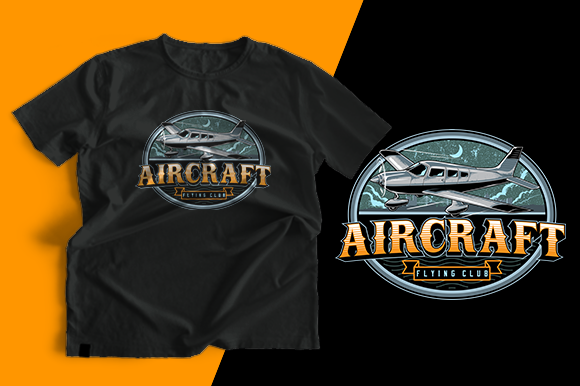
As someone who regularly builds out digital product collections for Etsy and print-on-demand shops, I’ve learned to look beyond a pretty preview and immediately check whether a design will actually hold up across real-world uses. When I came across the T-shirt Design - Aircraft file, I had a specific gap in mind: a clean, adaptable graphic that could anchor a small aviation-themed bundle for baby onesies, dad caps, and maybe a printable wall art set. The mood of the illustration immediately felt balanced — not overly childish, not hyper-realistic, but with a crisp, almost blueprint-like confidence that would suit both a vintage travel aesthetic and a modern hobbyist’s aesthetic.
The linework has a steady, deliberate weight, and the silhouette reads clearly even at thumbnail size. That’s a big deal for marketplace visibility. I tested a quick mockup on a dark heather tee, swapped the main stroke color to a soft ivory in under a minute, and the design popped without losing any edge definition. If you cater to pilots, travel lovers, flight school groups, or even STEM-focused kids’ apparel, this asset can step into multiple product niches without feeling repetitive.
What Makes This Design a Contender for Digital Sellers
Before downloading, I always scan for the practical details that separate a promising graphic from one that creates extra hours of rework. The product description lists a set of file formats that immediately reduce friction: AI, EPS, PDF, SVG, and PNG with transparent background at 300dpi. Having editable vector source files means I can treat this not as a static clipart but as a proper graphic design asset that I can tweak, recolor, and incorporate into larger compositions.
File Quality and Scalability
The claim of “100 vector shapes” is significant. It tells me the design is genuinely resolution-independent. I opened the AI file, and the layers were organized, not merged into a single compound path. That’s essential if you need to isolate specific elements — say, to use only the aircraft silhouette without the background circle or to adjust the stroke thickness for a bolder look on a tote bag. When I resized the graphic to fit a 4500×5400 pixel sublimation template, there was zero degradation. The SVG version imported cleanly into Cricut Design Space, and while I always recommend doing a test cut on scrap vinyl, the path structure looked mature with no hidden open paths or jagged overlaps.
Adapting Colors for Dark Apparel
The line about “possible and easy change color for dark t-shirt” is not just sales copy — it’s a direct nod to one of the biggest pain points in DTG and DTF printing. Many sellers upload a design with a dark fill that gets lost on black garments. This aircraft graphic ships with a darker default palette, but I selected all the key paths in Illustrator, switched the stroke and fill to white, and saved a “light garment” variant in under two minutes. I also exported a second PNG with a warm gold tone for a mockup on a navy sweater, and the contrast held beautifully. If you’re building a print-on-demand listing that offers multiple color options from one design, this flexibility cuts your prep time sharply.
Where the Aircraft Design Shines in Product Creation
To me, the real test of any digital product is how many SKU variations I can generate without the art feeling stretched thin. For this asset, the sweet spot includes merchandise with enough surface area to let the vector details breathe:
- Unisex t-shirts and hoodies — the central circular emblem anchors the chest print perfectly.
- Tote bags and canvas pouches — the graphic holds up even when scaled to a 10-inch print area.
- Sublimation mugs — the balanced composition wraps without awkward cropping.
- Printable wall art — layered with a subtle map texture and an inspirational quote, it becomes a nursery or office printable.
- Greeting cards and gift tags — cropped tightly, the aircraft alone becomes an elegant focal point.
- Phone case templates — the solid silhouette reads clearly on a small format.
- Planner stickers and journaling kits — the PNG transparent file drops straight into a sticker sheet layout.
When I position this design inside a themed bundle, I pair it with complementary assets like compass icons, cloud borders, or world map outlines. Even as a standalone SVG design for a Cricut project, it can produce a clean heat-transfer vinyl decal for a laptop lid or a kid’s water bottle. The commercial usability is broad without feeling generic.
Testing the Design Before You List: A Real-World Workflow
I never publish a listing without a quick validation routine, and this asset passed several checkpoints. First, I placed the PNG onto three different product mockup backgrounds: a crisp white tee, a charcoal hoodie, and a cream tote. On each, the transparency was flawless — no white fringing around the aircraft wings, no pixelated edges. That’s the 300dpi doing its job. Next, I opened the SVG in Cricut Design Space and checked the cutting preview; the manufacturer information imported at a manageable size, and all inner contours were attached correctly. If you’re planning a sticker design or a cut-file listing, you’d likely want to simplify the very finest delineation lines to avoid intricate weeding, but the current state is workable for decals above 3 inches.
I also ran a “tiny Etsy thumbnail” test. I shrunk the mockup to 150×150 pixels, and the aircraft silhouette was still instantly recognizable. For a crowded marketplace like creative marketplace feeds, that readability can make or break a click. I then placed the design into a Canva template for a baby bodysuit mockup. The bitmap version snapped right into the frame, and I could adjust the hue using Canva’s built-in color sliders — a nice fallback for sellers who don’t use Adobe tools.
Pitfalls to Avoid and Where to Use Sparingly
No design is universally perfect, and there are a few places where this aircraft graphic needs a careful hand. The internal stroke details, while sharp at larger sizes, start to clump if you shrink the design below 1.5 inches. I’d avoid relying on the full emblem for tiny sticker design sheets or mini planner icons unless you isolate a simpler section, like the propeller or the main body silhouette. For Cricut or Silhouette users, if you’re cutting a very small vinyl decal — say, under 2 inches — test the weeding first, as some of the narrow negative spaces could tear easily on certain materials.
On text-heavy templates, like social media promos with large overlays, the design’s circular framing can fight for visual hierarchy. I prefer to let it sit alone in a clean layout or use it as a subtle watermark rather than cramping it alongside bold typography. Also, on low-resolution print products, such as certain digital paper packs compressed for web use, the fine linework might soften — keep the output size large and the dpi high. If your product requires super clean cutting lines for a decal, consider tracing the outer silhouette only and discarding the inner detail for a bolder Cricut-friendly path.
Seller Checklist: File Organization and Font Pairings
When I prepare a digital download listing, I always bundle the original asset into customer-ready folders. For this aircraft set, I’d create a main folder with sub-folders for “Vector Files” (AI, EPS, PDF), “SVG” (with separate versions for cutting), and “PNG” (high-res 300dpi on transparent background). A quick “read me” PDF with color adjustment tips shields you from post-purchase confusion, especially if a buyer expects a pre-colored light version for dark shirts.
Pairing this design with text is where you can elevate it from a standalone graphic into a complete printable design or template. I tested several font families:
- Bold serif font — clashes with the precise linework but works as a vintage badge when spaced out.
- Clean sans serif font — a pragmatic choice that keeps the design modern and suitable for travel-themed merch.
- Graceful script font — softens the mechanical feel; I’d use this for a “Adventure Awaits” baby onesie.
- Informal handwritten font — brings a personal, scrapbook-like touch for journal covers or note cards.
- Extended display font — matches the aviation mood especially well, particularly for titles like “Pilot in Training.”
These pairings help you repackage the same asset into distinct mockups, making your shop look consistently fresh without constantly sourcing new art. I also tag my listings with relevant terms like “aviation clipart,” “airplane SVG,” “daddy pilot shirt,” and “vintage aircraft printable” to capture search traffic across several Etsy product categories.
Final Verdict: A Solid Base for Themed Collections
From a seller’s perspective, T-shirt Design - Aircraft earns its place in a toolkit not because it’s flashy, but because it’s structurally sound and unusually easy to modify. The vector roots mean I can drop it into any size template and never worry about blur. The color-changeability removes the typical headache of repositioning dark-elements on dark product mockup backgrounds. File formats cover the major workflows: sublimation, screen print, Cricut, paper crafting, and digital template building.
It’s not a set-and-forget magic bullet — you’ll still want to test it in your own Cricut machine if selling cut files, and you’ll likely tweak the stroke weight for very small merch. But as someone who’s filtered through thousands of graphics, I can say this one sits squarely in the “strategic asset” category. I’ll be using it across a layered aviation bundle that combines printable nursery art, a mug design, and a set of iron-on transfers. If you give it a few quick mockup rounds and store the editable AI file alongside your other print templates, you’ll return to it again whenever a travel-centric theme pops up in your product planning. The commercial license scope (always double-check the included terms) opens the door to unlimited physical product sales with minimal rework — exactly what a lean creative business needs.