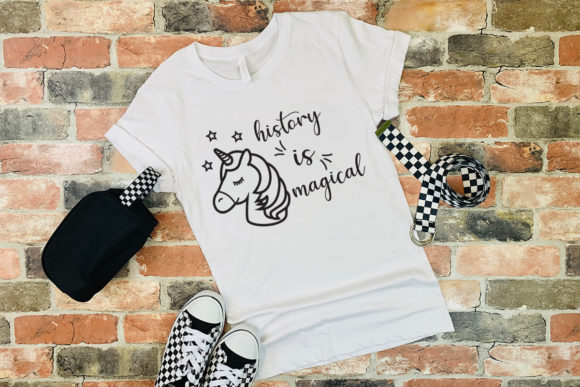
History is Magital Teachers Tshirt: A Stitching Review
The first time I opened the History is Magital Teachers Tshirt design, I felt that quiet spark every maker knows. It’s not just a graphic. It carries a warm, slightly whimsical personality that leans into teacher appreciation without becoming too cutesy. The mood blends vintage academia with a modern playful twist, making it immediately clear why crafters would reach for this for end-of-year gifts, classroom celebrations, or small shop teacher collections. For an embroidery designer, this visual blueprint immediately had me mentally mapping stitch angles, thread palettes, and the best fabric backgrounds where the design would truly sing.
First Impression and Artistic Mood
What strikes me instantly is how the text and any implied decorative elements work together. The phrasing itself – “History is Magital” – feels like a clever typographic poster that would look equally at home on a cozy sweatshirt, a sturdy canvas tote, or a framed hoop art piece. The layout appears balanced, not overly dense, leaving breathing room around the letters. That’s a huge plus when you’re thinking about thread coverage. A design that breathes well also lets the fabric texture show through, which is something I always look for in a clean machine embroidery design.
The theme walks a line between nostalgic and fresh. I could easily see a history teacher wearing this and genuinely smiling, or a student gifting it with pride. From a commercial embroidery standpoint, that emotional hook matters. Products that make someone feel seen or clever tend to become repeat sellers in Etsy shops and boutique booths. The History is Magital Teachers Tshirt has that quiet commercial charm without screaming for attention.
How This Design Behaves on Real Stitched Products
I’m a firm believer in testing every printable mockup or graphic through the lens of thread and fabric. Even though this is a digital product for print, the jump from ink to embroidery design isn’t far. I imagine how the letterforms would digitize: the curves need smooth satin stitch execution, and any tiny decorative dots or serifs would demand a carefully adjusted stitch density so nothing gets lost. On flat cotton tees or linen tea towels, the visual clarity would hold beautifully. On textured fabrics like waffle weave or thick canvas, some simplification of extremely fine detail might be needed to keep the embroidery file clean and readable.
In my studio, I often test such designs across a sample suite: a unisex t-shirt, a zip hoodie, a toddler raglan, a cap front, and a simple tote. For the History is Magital Teachers Tshirt, I’d prioritize the tote bag and the crewneck sweatshirt. The tote would handle the full design at a generous size, letting the personality of the typography shine. The sweatshirt, with its soft surface, would give the satin stitch a velvety finish, enhancing the giftable feel. For baby apparel, I might reduce the design slightly and soften thread colors to pastels, making it a sweet shower gift for a teacher parent.
The Tote Bag Test: A Practical Scenario
Let me walk you through a real-world scenario I encountered while planning a teacher appreciation collection. A local boutique wanted a last-minute gift drop: personalized totes for history department staff. I pulled up the History is Magital Teachers Tshirt graphic and mentally placed it on a natural canvas tote. The centered placement would work seamlessly, the lettering large enough to be legible from an arm’s length. I could already envision the reaction: a colleague receiving a practical, beautifully stitched bag that was both smart and sentimental. This is the kind of item that ends up on a teacher’s shoulder every day, quietly promoting the maker’s work.
Before stitching, I’d print a paper template, pin it to the tote, and take a step back. Does the scale feel right? Are the thin strokes in the “Magital” part going to be a nightmare under the needle? In my experience, with a digital embroidery file digitized from a clean template like this, the answer is no, as long as I use the right stabilizer. A medium-weight cutaway stabilizer on canvas prevents puckering, while a water-soluble topper keeps fine letter details from sinking into the fabric. These small choices transform a good idea into a professional handmade product.
Where to Use Caution with the History is Magital Teachers Tshirt
No design is perfect for every surface, and the critical eye is what separates a professional from a hobbyist. Here are the situations where I’d take extra care:
- Small hoop sizes: If the design contains any small flourishes or serifs, shrinking it below 4 inches risks blurring the thread definition. Test on scrap fabric at the actual run size.
- Stretchy garments: On thin rayon-spandex tees, even well-digitized text can distort. I’d use a fusible stabilizer and consider a knock-down stitch or a light framework of running stitch underlay.
- Dark fabrics: When the thread color is lighter than the fabric, any tiny gaps in satin stitch become obvious. I’d run a black-and-white thread test first, then check contrast on dark navy or charcoal.
- Caps and curved surfaces: The flat layout of the History is Magital Teachers Tshirt may need slight curvature adjustment for cap fronts. Not a dealbreaker, just a step that requires mindful hooping.
- Layered or bulky seams: On kids’ raglan sleeves or near hoodie seams, place the design carefully to avoid the needle hitting uneven thickness.
These are not flaws of the graphic; they are practical truths of embroidery production. A smart designer respects them and plans accordingly.
Visual Impact on Customer Trust and Sales
When a customer scrolls through an Etsy listing or picks up a product at a craft fair, they’re not just buying a decoration. They’re buying trust. The History is Magital Teachers Tshirt, when executed well, screams consistency and care. Its typographic rhythm feels intentional. Its theme is specific enough to attract a niche – history-loving educators – yet broad enough to appeal to anyone who loves a clever pun. This balance is exactly what I look for when choosing designs for my small shop product line.
In a mockup for a printable decoration or an iron-on transfer, the graphic already does heavy lifting. But when I stitch it out, I see an added dimension: the texture of thread gives the words a tactile authority that no flat print can match. That’s a competitive edge. If you’re selling custom apparel or personalized gifts, being able to offer the design as both a printed and embroidered version (using an embroidery file you digitized from this template) gives you flexibility. Just be clear in your listing which method you’re using, and always test stitch first.
Designer’s Pre-Stitch Checklist
Before I commit any project based on a printable graphic, I run through a mental checklist. For the History is Magital Teachers Tshirt, here’s what I’d note:
- Digitizing check: Even if the template is clean, I always review how the fonts translate into stitch objects. I’ll adjust pull compensation on thick downstrokes, open up tight counters in letters like “a” or “e”, and ensure the running stitch underlay stabilizes all start and stop points.
- Thread color test: I try at least three thread combinations on the actual fabric: a classic cream on navy, a warm gold on forest green, and a soft black on oatmeal. The design’s mood shifts with color, and I want the final product to reflect the right giftability.
- Hooping and stabilizer: For most apparel, I’ll grab a sharp needle, a medium-weight cutaway, and float a thin water-soluble topper if the fabric has nap. For a tote or pillow cover, a tear-away with temporary adhesive spray works well.
- Scale of details: I’ll print the design at 100% on paper, then trace the smallest elements with my fingernail. If my nail can’t feel a clear path, that detail might be too small for thread.
- Light and dark background contrast: I view the printed paper against both a black fabric swatch and a white one. If the design disappears on one, I’ll adjust my thread choices or saturation before stitching.
Commercial Use and Small Business Potential
For any designer selling finished goods, the licensing side is non-negotiable. Since the History is Magital Teachers Tshirt is listed under Print Templates and Graphics, I’d verify it includes a commercial usage allowance for finished physical products. Many templates do, but it’s always wise to double-check before you print a full inventory of sweatshirts or totes for your shop. If you plan to sell the design as a standalone digital embroidery file, however, that’s a completely different license – usually not permitted with print assets. So I’d only use it to create my own stitched items for sale, not to redistribute the embroidery version.
As a craft business asset, the design works beautifully for teacher appreciation bundles. Pair a history-themed tote with an embroidered patch of a tiny compass or quill, and you have a cohesive product line. For Etsy sellers, the design fits easily into mockup templates, giving you a polished listing photo even before a single stitch is made. That’s the beauty of starting with a strong graphic; it shapes your entire presentation.
The Subtle Magic of a Smart Design
What I appreciate most about the History is Magital Teachers Tshirt is that it does not try too hard. It’s not cluttered with unnecessary embellishments. That restraint is what makes it so usable in machine embroidery design adaptation. The personality is in the wordplay and the implied visual texture, not in a thousand tiny details that will frustrate you at the digitizer. When I think of all the hurried, poorly digitized teacher tees I’ve seen at discount stores, this design feels like a quiet antidote – something that, when properly stitched, will actually get worn.
For embroidery designers and makers looking to add a fresh teacher-themed piece to their spring lineup, I’d comfortably recommend trying this graphic as a starting point. Test it on a simple tote first. Let the stitches settle, wash it once, and see how the design lives in the real world. I suspect you’ll find, as I did, that the result is a piece that feels intentional, personal, and quietly proud – exactly what a good handmade product should be.
Disclaimer: Technical specifications like stitch count, file formats, and exact hoop dimensions are not provided for this print template. Always perform your own digitizing and testing to ensure compatibility with your equipment and intended use.