Eagle Aviator Graphics for Print Templates
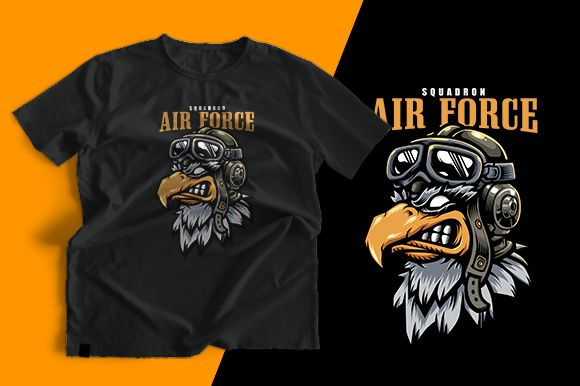
When a craft spirits brand asked me to concept a label series that felt equal parts vintage aviation and American folklore, I knew I needed a graphic element with heritage, attitude, and serious print versatility. The T-shirt Design - Eagle Aviator asset immediately stood out. Not as a novelty illustration, but as a tightly constructed vector emblem that could anchor everything from bottle tags to leather coasters and, yes, t-shirt merchandise. The first impression is bold, symmetrical, and slightly industrial—the kind of graphic that reads like a heritage badge redesigned for a modern product line.
A visual mood that commands attention
The eagle sits front and center, wings spread in a commanding silhouette, aviator goggles adding a steampunk nod without tipping into cartoon territory. It’s aggressive without being chaotic, and the linework holds enough negative space to breathe even on a crowded merch table. This isn’t a fragile clipart piece; it’s a graphic design asset built from 100 vector shapes, which means path precision is excellent. You can scale it to a 30-inch wall decal or a tiny hang tag and the geometry stays crisp. For dark t-shirts, the ability to easily shift colors is a lifesaver—I tested it on a charcoal mockup by swapping the main body to a muted gold and the goggles to a weathered silver, and the result looked like a vintage motorcycle club emblem. That level of quick recoloring is critical when you’re juggling multiple SKUs for a client.
Where this eagle lands naturally in a client project
I originally pulled this into a visual board for a handmade beard oil company that wanted packaging that felt like a backcountry aviation supply drop. The Eagle Aviator design became the hero graphic on their matte black boxes, paired with a slab serif font. It worked. But the asset has broader uses than just t-shirt design. Think about brand identity systems for outdoor gear, craft beer labels, or a small business that sells printable wall art in a rustic adventure niche. The graphic holds enough detail to serve as a primary logo mark, yet it’s bold enough to be a decorative accent on a tote bag or a sublimation design on a mug.
For digital sellers and print-on-demand operators, this file set is particularly useful. The included PNG transparent 300dpi drops right onto product mockups for t-shirts, hoodies, and caps without needing to isolate backgrounds. The SVG and EPS formats mean you can pull it into Cricut Design Space for iron-on vinyl projects, or into a Canva template for social media graphics where you need a rugged emblem to frame a promotional offer. I’ve seen designers use similar assets to build entire themed collections around a single graphic—like a set of printable designs for a “Fly High” baby shower, or a series of sticker design sheets for a craft fair booth.
When the asset shines at full scale
Large layout areas are where Eagle Aviator truly performs. placed as a hero graphic on a poster or a retail sign, it creates immediate hierarchy and a strong focal point. I tested it as the centerpiece of an event flyer for a local air show, and it gave the design instant credibility—no need to overcomplicate the composition. For packaging design, especially on boxes or bags with plenty of surface area, the emblematic nature of the eagle gives a premium, small-batch feel. Product designers working on print-on-demand apparel will appreciate that the file includes AI 10 and EPS 10 formats, meaning you can open and fine-tune colors for light or dark garments in Adobe Illustrator without losing editability. The note that color change is “possible and easy” for dark t-shirts is accurate; because the shapes are cleanly separated, you can select and recolor individual components in seconds.
If you’re building a marketing visuals campaign, this graphic works beautifully paired with a bold display font for headlines. I mocked it up as a Pinterest pin with “Adventure Awaits” in a condensed sans serif, and the click-through potential felt strong. It also translates well to editorial design—imagine a magazine spread for a travel feature, where the eagle serves as a drop cap or section divider.
Where you need to handle it with care
Where I would urge caution is in extremely small sizes or overly complex backgrounds. Because the eagle has intricate wing feather details and the goggle straps, printing it below one inch across might lose some definition. On a business card layout, I’d likely enlarge it as a watermark or use a simplified version if the vector allowed it, but as-is, the detail level is better suited to emblems that are at least 1.5 inches wide. For minimalist branding or corporate environments that require very clean visual hierarchy, this graphic might feel too ornate. If your client is a law firm, obviously not. But for a handmade business selling campfire mugs or a boutique coffee roaster, the visual weight becomes a strength.
Testing contrast is essential. On dark backgrounds, the default dark tones in the eagle can get muddy—so that easy color change feature is not just a perk, it’s a necessity. When I prepared a dark navy t-shirt mockup, I lightened the eagle’s chest and head to a dusty cream and added a subtle outline to keep it legible. Always preview it on both light and dark substrates, and if you’re using it in a social media post with a lot of text overlay, consider placing the eagle in a corner or as a badge so it doesn’t fight the message.
How the file formats affect real-world workflow
The inclusion of AI 10, EPS 10, PDF, SVG, and PNG Transparent 300dpi is generous and covers nearly every use case. For Cricut project enthusiasts, the SVG is ready to go and scales without degradation. For designers creating Canva templates to sell, the PNG with transparency slips right into template backgrounds without a white box issue. The PDF is handy for sending to a client for quick approval—they can open it and see the crisp lines. I always check vector editability, and the EPS opened smoothly in Affinity Designer as well as Illustrator, with all elements groupable and recolourable. One thing I’d add as a habit: when working on a commercial design for a client, verify that the asset’s license covers merchandise for resale. Most creative marketplace downloads require a commercial license for items sold, so read the terms before printing 500 t-shirts.
Pairing Eagle Aviator with typography and other elements
In my test run, I combined the eagle emblem with four different font categories to see where it felt most natural. With a serif font like a classic Garamond bold, it turned into a prestigious university-style crest, perfect for a fictional alumni line. With a sans serif font—specifically a condensed grotesque—it felt like a modern aviation tech badge. A script font gave it a vintage hot rod shop vibe, while a handwritten font made it almost whimsical, suitable for a children’s adventure book cover. The key is that the eagle doesn’t dictate the mood; it amplifies what the typography and layout suggest. That adaptability makes it a smarter digital product investment than a one-style illustration.
Practical checks before client delivery
Before handing off a design that relies on an asset like this, I run a standardized checklist. First, I test it in black and white to see if the silhouette holds up without color cues—it does. The wing shape and goggle profile remain readable. Next, I print it at actual size on a home laser printer to gauge line thickness and any choking; the thicker outlines in the wings survived, though very fine inner details softened slightly. On a screen, I zoomed to 50% and 200% to simulate small mobile viewing and large-scale print, and the balance stayed reasonable. For packaging design, I dropped it onto a 3D mockup of a candle jar, a soap box, and a hang tag to confirm it doesn’t warp awkwardly around curves—the symmetrical nature helps it sit evenly. For social media graphics, it held its own as an Instagram post when paired with a textured background and a bold promo text, so I’d confidently use it in an ad set.
The commercial value for creative sellers
For Etsy product creators, print-on-demand sellers, and small business owners building their own merch lines, Eagle Aviator fills a specific niche. It’s a design asset that fits the growing demand for heritage, adventure, and outdoor-themed products. You can design a full suite around it: t-shirts, hoodies, enamel pin mockups, sticker packs, and even printable wall art for a cabin or man cave. Because it’s vector and editable, you can modify it enough to avoid exact duplication across shops—swap a color, remove the goggles for a simpler eagle, or combine it with a landscape background. Just remember that if you sell the graphic as-is or modified, your license must permit resale of derivative works, so always audit commercial terms.
Blending into brand identity and editorial use
I’ve used similar assets in editorial design for magazine inserts, where an emblem like this can anchor a sidebar or pull quote. For web design, it could become a favicon if simplified, but at full resolution it’s better as a hero section badge or footer emblem. It’s surprisingly effective in a product mockup for a leather journal or a flask, adding a sense of heritage without needing additional illustration. For the client project that started this review—the craft spirits label series—I ended up using Eagle Aviator on the limited-edition dark rum bottle, changing the eagle’s color to copper and adding “Est. 2025” in an arc above it. The client loved the feel, and the design went from concept to print in two rounds because the asset was so clean out of the box.
Final designer notes on longevity and usability
What impresses me beyond the surface is the long-term flexibility. This isn’t a trendy graphic that will look dated next season; the aviator theme has persisted in fashion and branding for decades. Whether you’re designing for a handmade business, a small business branding project, or a seasonal campaign for a local event, the eagle emblem carries a timeless, rugged confidence. It plays well with distressed textures, wood backgrounds, and kraft paper, and it can pivot from masculine to gender-neutral depending on color and surrounding design choices.
If you’re considering adding this to your design assets library, test it on all the mockups you can, experiment with the vector files to understand how the shapes separate, and always have a black-and-white printout on hand for client presentations—it builds trust when they see the graphic holds up in any format. For any designer who regularly tackles print templates, apparel graphics, or product branding, T-shirt Design - Eagle Aviator is the kind of creative design resource that earns its place in a toolkit, ready for that next client who says, “I want something classic but with a little edge.”