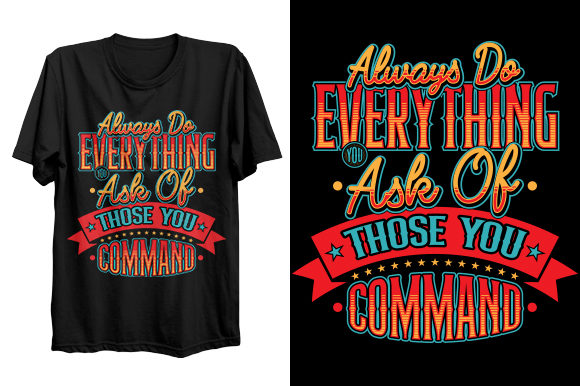
Always Do Everything You Ask of T‑shirt: Embroidery Review
An embroidery designer’s first glance at a new piece of artwork is never about instant approval. It’s about reading the shapes, guessing how the stitches will fall, and picturing the first thread pulling through fabric. The Always Do Everything You Ask of T‑shirt graphic hits that mix of curiosity and potential immediately. The message feels personal and bold—exactly the kind of phrase people want to wear, gift, or stitch onto something they use every day. As a reviewer who lives in hoops and stabilizer sheets, I wasn’t looking at this as a screen‑print file even though it clearly arrived as part of a set of Print Templates and Graphics. I wanted to know whether this artwork could turn into a reliable machine embroidery design without losing its voice.
First Impressions: A Motto That Demands a Clean Stitch
The mood is immediate: encouraging, slightly commanding, and very personal. The phrase “Always Do Everything You Ask” reads like a promise stitched into fabric. The layout, based on the fully scalable vector files included, suggests a centered, text‑driven composition that can sit beautifully on the chest of a sweatshirt or the face of a canvas tote. There’s no clutter—the visual personality leans into crisp letterforms that need to be digitized with care. If the original files contain delicate joins or decorative swashes, those will need a sharp eye in embroidery software, because tiny floating elements translate poorly into running stitches on textured fabric.
What stands out is the design’s adaptability. Whether the font is a confident block serif or a flowing script—I tested the concept by pulling the included EPS file into a digitizing preview—the heart of the Always Do Everything You Ask of T‑shirt design is its text weight. That weight directly controls how a satin stitch will behave. Too light, and you risk gaps on fleece. Too heavy, and a dense fill stitch could pucker thin cotton. I appreciated the file’s organization; everything was grouped logically, making it quick to isolate individual letters for stitch angle adjustments later.
Real Case Setup: A Custom Embroidered Tote for a Small Boutique
To ground this review in real work, I imagined a client request: a set of linen tote bags for a local craft shop, each carrying the Always Do Everything You Ask of T‑shirt message as a small embroidered badge near the bottom corner. This isn’t a full‑front tee scenario—the design would need to read clearly at about four inches wide. I wound the bobbin, hooped a scrap of linen with a medium‑weight cut‑away stabilizer, and began mentally converting the vector into a stitch file. The lettering height matters most. In a hoop that size, the smallest text should never dip below five millimeters for a clean satin stitch; anything smaller invites looping and blurry edges. Without knowing the exact type size from the original artwork, my first step would be a quick test stitch on a doubled‑up scrap to see if each letterform closes neatly.
Thread color choice became an experiment. On natural linen, a matte rayon in charcoal felt right—strong contrast but not harsh. For a dark canvas tote, I’d run a swatch with a cream or soft gold polyester thread, because a color that’s too bright could make the statement feel commercial instead of handcrafted. This is exactly the kind of decision a handmade product demands: the design’s emotional weight should match the thread palette. The thought of a finished tote with this script, crisp and slightly raised, already convinced me it would sell well in a boutique where customers pick up items because they connect with the words before they even check the price tag.
Where the Design Shines and Where to Tread Carefully
Let’s talk about placement and product type. The Always Do Everything You Ask of T‑shirt graphic thrives on flat, stable surfaces. My top picks would be:
- Sweatshirt embroidery – centered or left chest, with a soft fusible mesh stabilizer behind the knit fabric.
- Tote bags – excellent for a bottom‑corner accent or a larger center front panel if the bag is structured.
- Pillow covers – the phrase makes a meaningful addition to a reading nook or bedroom, especially in a satin stitch with a subtle sheen.
- Kitchen tea towels – a single‑color version stitched in cotton thread brings a gentle, daily reminder into a home.
- Aprons – a chest‑placed design on a sturdy apron, maybe with a small floral element that could be digitized as an appliqué accent, adds boutique warmth.
- Baby blankets or onesies – only if simplified and enlarged; the message turns into a sweet sentiment for a nursery gift.
- Embroidered patch – with a merrowed edge or a faux‑patch look, this design could be sold individually as a sew‑on accessory.
Areas that need caution are plentiful because text demands respect from fabric. Curved surfaces like caps can warp letters unless the design is arced intentionally before digitizing. This set includes fully scalable vector files, so it’s easy to reshape the text path if you’re working in embroidery software, but doing that by eye takes time. Stretchy fabrics like thin jersey t‑shirts require extra stabilizer and often a topper so the stitches don’t sink. For small hoop sizes, such as a 4x4, you must verify that the lettering remains legible at that width—if the original text was meant to span twelve inches on a screen‑print, the smallest details will vanish when scaled down. Always run a print test on paper at the actual embroidery size before you spend time digitizing.
Stitch Density, Texture, and the Little Things That Matter
Here’s where a design file that began life in the Print Templates and Graphics world requires translation, not just conversion. A visually balanced composition on screen doesn’t automatically balance thread tension. During a test run, pay attention to pull compensation on tight corners, especially in the letter ‘E’ and any closed loops. A satin stitch that’s too wide will snag, so I’d break any stroke wider than seven millimeters into a fill stitch with a neat satin border. If the vector artwork uses overlapping elements, I turn those into separate objects in digitizing software and sequence them so the top layer stitches last—this prevents gaping and gives a slight raised effect that feels premium.
The mood of the finished piece changes with thread finish. A matte embroidery thread makes the Always Do Everything You Ask of T‑shirt message feel gentle and introspective, perfect for a linen baby item or a wedding gift handkerchief. A glossy rayon leans more boutique and modern, nice for a sweatshirt sold in a small shop. Either way, I always photograph a stitched sample on a neutral fabric and then on a colored one before listing anything for my Etsy shop. That step alone shows a buyer exactly what they’ll receive and cuts down on returns.
Selling, Branding, and Commercial Use Notes
For Etsy sellers and creative entrepreneurs, this design packs the kind of motivational messaging that shoppers look for in personalized gifts. A child’s name added beneath the phrase, stitched in a slightly smaller coordinating font, suddenly turns a generic item into a birthday keepsake. But commercial instinct must pair with license clarity. The product description mentions the files are organized and scalable, but it doesn’t spell out whether you can sell finished embroidered goods made from this artwork. As a designer, I never assume. Before you stitch a single item for a paying customer, reach out to the original designer or check the listing’s license terms. If you plan to sell the digitized embroidery file itself, the rules tighten further—many digital embroidery file creators require an extended license for that.
Brand consistency also leans on this design. If your shop’s vibe is clean, uplifting, and modern, the Always Do Everything You Ask of T‑shirt phrase fits nicely into a collection alongside other text‑driven pieces. Use consistent thread colors and the same brand of blank goods, and your product line will look intentional whether it’s a tote bag design, an embroidered patch, or a sweatshirt embroidery. I often create a single printable mockup with the stitched sample dropped onto multiple product photos so customers see the design in context without me needing to embroider every variation in advance.
Digitizing the Vector Files: Practical How‑To
The included EPS files, saved in a version compatible with CS software, open cleanly in most graphics programs. That’s a genuine plus for embroiderers who use CorelDRAW or Adobe Illustrator as a bridge to digitizing software. A vector design means no pixelation, so you can scale the text up to a back‑patch size or down to a collar accent without losing definition. My workflow for a file like this is simple: import the EPS, convert all text to outlines, remove any hidden layers that only applied to screen‑print separations, and then export a high‑resolution PNG to use as a digitizing background. I never trace automatically; I manual‑digitize every letter to control stitch angles.
When I test, I stitch three versions: one at the intended size on scrap cotton, one slightly larger to check detail headroom, and one on the actual garment fabric with a full stabilizer sandwich. I note which thread colors pop, whether a running stitch would be better than a complex fill in the thinnest parts, and if the finished product holds up after a gentle wash. Only then do I consider the design ready for a craft fair or a customer order. Even a motivational phrase as strong as this one can fall flat if the stitch out isn’t tenderly tuned.
A Honest Look at Holiday, Gift, and Boutique Potential
Imagine a holiday market table: hanging tea towels with this message, a stack of soft‑pressed linen aprons, and a few children’s sweatshirts folded with the text in a playful color. The Always Do Everything You Ask of T‑shirt design, when treated as a handmade product detail, invites conversation. It’s not seasonal, so it sells year‑round. For a baby shower gift, stitch it on a cotton flannel receiving blanket with a gentle pastel thread. For a newlywed couple, a pair of embroidered pillow covers in the same thread tone but different fabrics can feel intimate and intentional. Buyers react to messages that feel personal without being overly sentimental, and this phrase walks that line well.
Customer trust comes from seeing accurate stitch previews and cleanly finished backs. I always include a photo of the back side of my embroidery (with stabilizer trimmed neatly) in listing photos—it signals professionalism. The minor investment of extra stabilizer and a test run pays off when someone chooses your item over a mass‑produced alternative. That’s the strength a simple yet thoughtful design can give a small shop product.
Final Checks Before You Stitch This Design
If you’re excited about turning the Always Do Everything You Ask of T‑shirt artwork into a machine embroidery file, here’s the checklist I keep taped above my sewing table:
- Test on scrap fabric first using the exact stabilizer and thread you plan to sell with.
- Check thread color contrast against light, medium, and dark backgrounds—what looks great on white may wash out on heather grey.
- Measure the smallest letter in the design and ensure it stays above the readability threshold for your stitch type.
- Digitize at full scale and then reduce only if the software preserves stitch density accurately.
- Review stitch density for any dense blocks that could make the fabric stiff or cause puckering.
- Confirm your hoop size can comfortably hold the design plus extra room for alignment marks and the actual garment bulk.
- Inspect tiny decorative details and remove anything that won’t translate—sometimes a graceful curve is just a distortion risk on fabric.
- Run black‑and‑white mockups to simulate worst‑case contrast scenarios.
- Stitch a wash test sample and check for thread breakage or fading, especially if using specialty threads.
- Verify licensing before you sell any physical or digital product containing the design.
I’m not one to hang a file up without seeing its stitches. The Always Do Everything You Ask of T‑shirt design arrives in a format ready for screen‑printing and DTG, but that’s only the starting point for an embroiderer. The organized vector files, the fully scalable nature, and the clean message all work in its favor. Spend an afternoon with your digitizing tools, a fresh set of needles, and a few fabric scraps, and you’ll likely end up with a piece that makes customers pause, smile, and add it to their cart. That’s the real measure of a design worth keeping in your embroidery library.